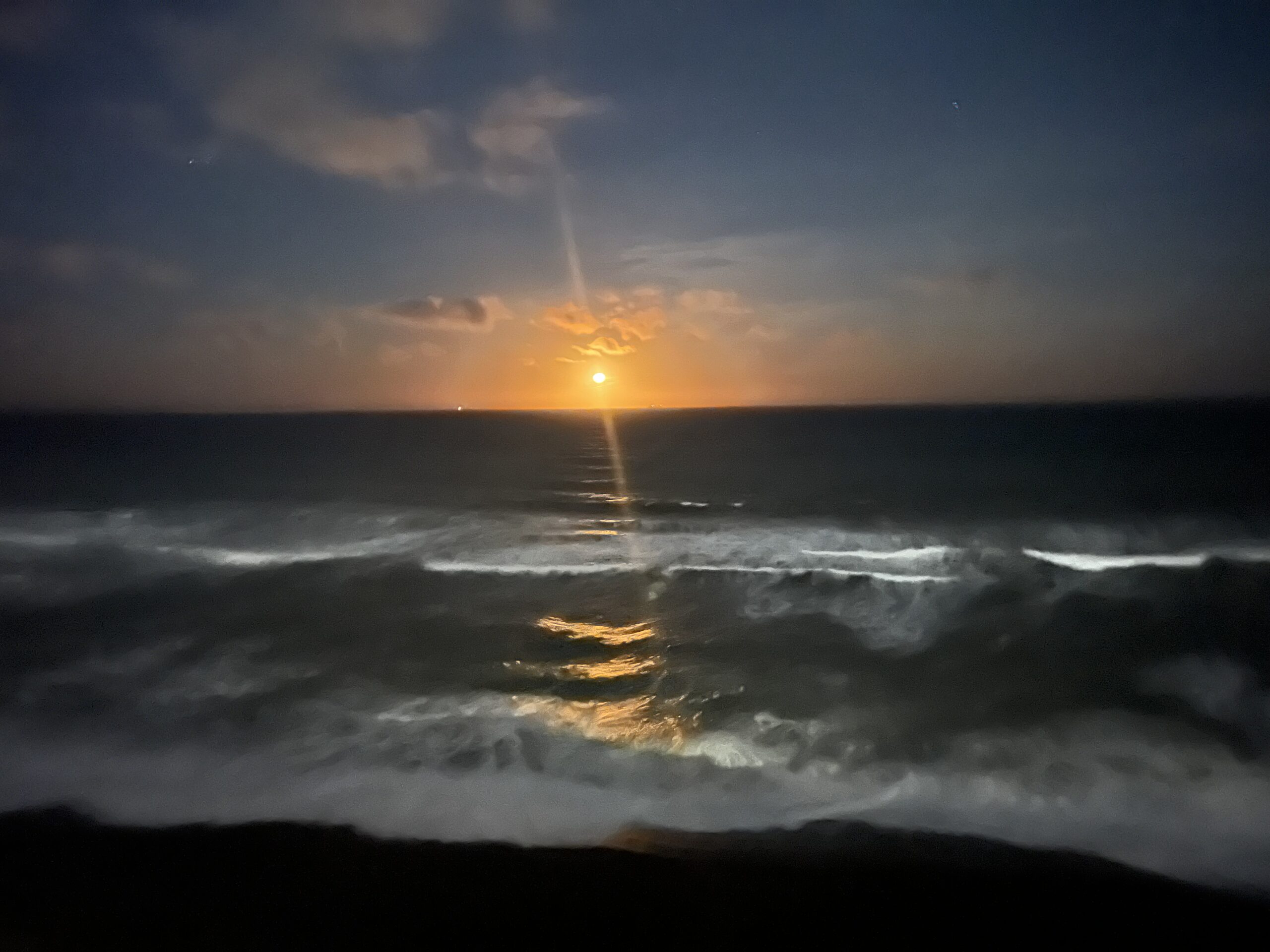
The winds brewing over the ocean and pouring in with interludes of fog left goosebumps in their tracks. I took no notice of the brisk breeze as I was stunned by what I was looking at. It was one of those infrequent happenings where you catch a different perspective of nature—when you look in through that certain lens and really notice nature's never-ending work. I felt grateful for having been dragged to Pacifica—40 miles from home—because if I had not, I would have missed what my eyes now faced.
The moon was now peeking out from a gathering of clouds. The clouds somberly swept by, swallowing the moon in such a way that they looked like eyelids, embracing a serpent’s eye, amber and never-blinking, keeping a close watch on the waves it moved below. I wanted to get down to the beach and off these cliffs. Because of all the lunch breaks I used to take on this beach, I knew the way down. However, it was dark, and my phone’s light offered very little aid. I thought I saw the path down but was met with a 40-foot sheer drop that plunged into the darkness. I stepped back and wiped the nervousness off my brow. Eventually, I found the way down, but there in the shadow of a dune, like a beast waiting to pluck off its next victim, somebody stirred and grunted in the darkness. “Fuck this,” I thought, “I’m going home.”
Now back on Highway 1, heading homebound to the 280, I crawled up the two-lane road that crawled up the coastal hills. In my rearview mirror, I saw the moon again. It was much lower now, but it was larger. The cloudy eyelids were now squinted, and the serpent’s eye, darker now. Near the final bend before the ocean would leave view, I got one last glimpse of the serpent’s eye, its cloudy lids now nearly closed. I could see the ripples of white water spreading away from the descending moon. Right before I took that final bend, the lids almost completely shut, with only a slit of amber moonlight remaining. Then it bid farewell and dropped behind the far-reaching sea. The serpent had gone to sleep.